Humanness and Empathy

One of the most important parts of interpersonal communication is the ability to empathize with another. This is sometimes hard to do because we don’t understand how a person could say or act a certain way. We want to say, “I can’t believe you would.…” That does not help the situation.

But I believe one of the ways to combat that is to see the humanness in saying or doing the wrong thing. If we can somehow realize and show that we are human and make mistakes, or even that we have done the same thing when we were younger or more inexperienced, we are more likely to empathize.

For example, in Things a Little Bird Told Me by Biz Stone, the founder of Twitter, Stone refers to actor Harrison Ford’s popularity. He believes Ford is beloved because we can all relate to his humanness, even though he usually plays the hero. Stone says, “Traditionally, heroes are fearless, strong, and pretty much bulletproof.” But then he points out that Ford is not that way. Whenever he is in a difficult situation he looks either scared or like he’s thinking, “Oh, God, I can’t believe I have to do this now.”

As Stone writes, “In Raiders of the Lost Ark, faced with a pit of writhing vipers, that he has no choice but to pass through, he famously says, ‘Snakes, why did it have to be snakes?’ There’s no bravado. The hero he gives us is a regular guy…and now he is in a snake pit.”

This human aspect is why my favorite professional athlete is Mike Leake, pitcher for the Cincinnati Reds. He is the number three starter and in five years with the Reds he has won 53 games. However, he does not look like a professional athlete. He is 5 feet 10 inches tall and is slightly built. From a distance, he looks like he might be the batboy. He just goes about doing his job in a workman-like manner. His pitching style looks effortless. His appearance and demeanor makes you think, “I could do that, too.”

While watching my three-month-old granddaughter, I see that this is something you learn very young. This morning after she had spent much of an hour crying, flinging her arms and legs, and refusing to go to sleep, I sat her on my lap facing me. She stopped crying and just stared at me. I looked back at her and suddenly she gave me this little smile that seemed to say, “Remember, Papaw, I may be merely three months old, but I’m another human being with frustrations just like yours.”

The next time someone is telling you something that you simply cannot identify with, think about what it means to be human and to make mistakes. In a real sense, we are all working to get through the day and do the best we can. Let’s remember that is also true of other people as well as ourselves.
Connecting on a Cruise

My wife and I usually take a winter cruise to enjoy warm weather instead of suffering in the frigid Midwest. The experience, however, is also an education. We have taken classes on folding napkins and taken a tour of the kitchen area where thousands of meals are prepared every day, as well as learning from a chef how to prepare seafood.

But because we signed up this time for My Time Dining, we sat with different people at most meals. You might think this is an uncomfortable way to select meal partners—complete strangers sharing a meal—but not necessarily. At breakfast one morning this week we were seated with nine people whom we had never met before. When we first sat down, all seemed to bury their faces in the menu to avoid contact with the rest of us.

Since teaching and training in communication have been my life’s work, I saw this situation as a special challenge to help everyone get comfortable. I began by looking out over the group and asking the general question, “Where are you all from?” All were from Mississippi and Texas and were made up of three different families. That began a good conversation on careers, sports interests, and family connections.

In the course of the meal I learned that one man, a steel worker, had created the mold to make McDonald’s McRIBS. Another had three engineering degrees and was very much involved with building drones for a Department of Defense contractor. A retired 80-year-old farmer had just sold several beef cattle for the highest price he’d ever gotten. (No wonder beef is expensive in the meat department of our local grocery store!)

This kind of education you will not find in a book, but you can get it by having a meal and connecting with a group of strangers you will never see again. I will forget the songs the performers sang in the theatre that night, but I will remember our breakfast companions for a long time. You don’t have to be on a cruise to strike up a conversation with the person you happen to be sitting by. In so doing, you will continue to be a student.

What Kind of Conversation Was That?

You can tell how important something is by the number of words used to describe it. For example, according to anthropologist Franz Boaz, the Eskimo language has 50 words for “snow.” For most of us in the United States, snow is simply snow. But since so much of an Eskimo’s life centers on snow they have many words to identify it in various ways.

I believe the same is true of conversation in our culture. The variety of words for having a conversation stresses its importance in most of what we do each day.

For example, banter involves having a few quick, often witty comments with your listener, as does repartee. The quip might be a single comment in a conversation. Two people talking equally is a dialogue, while a heart-to-heart talk with someone close to you is a tête-à-tête. A slang term for a chat is a confab, short for confabulation.

When you have a conversation with someone who talks a lot but the content is superficial and disorganized, you might say this person prattles. Closely connected to that is to footle, which also means to talk foolishly. The raconteur is the person who tells stories in an amusing way.

One could mention many more examples. But this series of samples demonstrates that when you talk to someone you are doing much more than stringing words together to make a point.

What other examples would you add to this list?


The Green Monster: A Case Study of Handling Customer Complaints

Our friend Tom owns a waste management company called Green Monster Recycling and Disposal. All his trucks are green and his recycling program emphasizes being green. He has a thriving business in a small Middle Tennessee community. You can imagine the challenges of satisfying hundreds of customers a week. He has great stories about what his crews find in trash cans, strange questions customers ask, and reasons why a bill has not been paid.

In spite of his great concern to satisfy each customer, he gets about 5 – 8 complaint calls a week. He told me that after six years he has a system that works for him in dealing with the difficulty of communicating with a dissatisfied client. Whatever the complaint, as soon as they voice their complaint, he follows with a three-part response:
“I understand how this is upsetting to you.”
“I apologize for this inconvenience.”
“What can I do to resolve the problem?”

Tom said this has been the best way he has found to defuse the customer’s anger. Even though the customer may be at fault, this approach calms the person and allows him or her to listen to whatever Tom has to say. By asking what they want him to do, the customer is placed in a position to help solve the problem and gives Tom time to think.

We all have our own methods for dealing with the difficult person, and this one I believe has real merit. Defusing the situation with humility and understanding can go a long way in developing a good relationship with difficult people, whether co-workers, friends, or (no surprise here!) family.


Not All Valuable Information is Found by Googling

I grew up in the card catalogue era. If you don’t know what that is, ask your parents. Today I can ask my students a question they don’t know the answer to and they can give me the information in a few seconds by googling it on their Mac or iPhone. But I have found that some of the greatest sources of information are people who have been students of life and surroundings such as my wife’s Uncle Tommy.

In all my years in my wife’s family, Tommy is the one I most enjoy talking to because he knows so much about so many things.

Tommy drove a semi-trailer truck so long that he was honored for driving over two million miles without an accident. One day I asked him, “What is the one thing you did that helped you drive that many miles without an accident?”

His response came quickly: “Always look a mile down the road…for brake lights.”

That line has guided me often since; there are so many applications besides to my driving habits. Look to the next day before retiring for the night. Look down the road at what needs to be covered before midterm exams, or remember to check special family days that you want to honor.

Tommy’s breadth of knowledge amazes me. He and his wife, Deba, recently moved from the city to the country and he loves to spend time working outside. When I was there a few days ago admiring his garden, I asked a question about the green plant that looked like radishes. He said, “That is mustard and we just ate that recently.” I then got a commentary on several unusual vegetables I was not that familiar with.

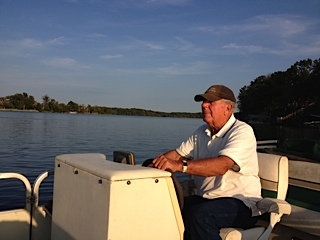
Tommy is a great fisherman and I had the privilege of going fishing with him on his pontoon boat on Old Hickory Lake near Nashville last week. I was amazed at how adroitly he maneuvered his truck and the huge boat down a narrow road to the place where he could put the boat in the lake.

Once we got in the lake, he began to point out certain houses around the lake. He referenced some landmarks and gave a little history of the lake. I asked how deep and how long the lake was. He knew the answers to both questions. Although it was not a great day for fishing he still caught several and I mainly observed—though not by choice.

Tommy is also a great chef. I’ve eaten his homemade biscuits and other traditional Southern breakfast items. One time he discussed how he created some of the dishes he is known for. His fish fry dinners are the best and people who are invited to one make every effort to attend. I’m not sure how many pounds of fish you will find in his freezer at any given time, but he can always make time to “fry some up.”

He is an expert marksman and hunts all kinds of fowl. He mentioned dove hunting season and when I told him I had never eaten dove, he went into a discussion of how to prepare the meat and about its taste.

Each time I visit Tommy, I learn new things. I thoroughly enjoy learning from people who study life and all that goes into making a meaningful life. A favorite source for me is my friend and uncle, Tommy. Did I mention that Tommy is 79 years old?

Speaking Without Notes

My greatest fear in speaking came to reality for me Sunday. I forgot my speaking notes for both my class and my sermon! I did not realize this had happened until I got up to teach the class; it was too late to drive the twenty minutes to my house to retrieve them. What does a speaker do when he forgets? I was able to practice some of the principles I share in my speeches and seminars on public speaking.

Putting into practice my suggestions on preparation was a huge help. I had spent several hours during the week preparing for both programs. I always work hard to have a few simple and specific main ideas to communicate to my audience. I found several resources and went over my material several times making notes and typing the outline I wanted to speak from.

On Sunday morning I spent an hour going through my notes and thinking about the audience and how I wanted to handle possible questions in the class and how to use my slides for greatest impact in my sermon.

I also spent time praying that I would have a good memory of what I had prepared to say and that God would give me common sense in dealing with the unexpected from the audience or surroundings.

My philosophy is never to make excuses about my speaking, so I did not mention that I had forgotten my notes. When I mentioned this fact to a couple of people afterwards, each said they could not tell any difference even though they noticed I had no notes. I spoke my allotted time in both settings.

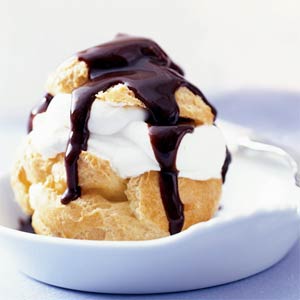
What made me forget my notes when I double and triple check before I leave for a speaking engagement? Cream puffs!! Not just any cream puffs, but the ones we had purchased at a bakery that only makes them around Oktoberfest. I was carefully placing them in the trunk of our car for a lunch gathering later that day. Yet another time when food got in the way of more important things!

An Unusual Landfill

One of the blessings I never thought much about is the USA system of disposing of trash. Landfills may not always have the best aroma as you pass by them along a highway, but they are much better than what I have experienced on the street adjacent to our building in Natal. The street has two lanes going in each direction with a median in the middle. That does not sound at all unusual. Many city streets in the United States have medians separating lanes. And trees line the median, as is the case in America.

However, in this city, on a busy street, the median serves as a landfill. About 100 yards from our apartment is a trash disposal area. Yesterday morning I noticed that someone had dumped a washing machine and a fan for us all to observe. Those objects were in the middle of what you would typically find in a landfill.

Interestingly enough, during the day someone had taken the washing machine and replaced it with a nondescript piece of junk. For the three weeks I have been here, that location has received all kinds of discarded lumber, wire, and family garbage, as well as brush from nearby palm trees. That was the first time I had ever observed that someone had exchanged pieces of trash.

One day I watched a man pick up a discarded cardboard box. I thought, “Well, at least he is going to put the trash in the landfill area.” No, he wanted the trash out of his space where he played dominoes with several other men. Instead he threw it in the middle of the street away from him. I guess any area that is not your personal space is appropriate for a trash collection area.

On another day, city workers in what looked like a flat bed garbage truck, stopped at the landfill area. I thought, “Good, that trash is finally going to be picked up.“ One man got in the middle of the pile of trash and threw some pieces of old lumber on the flatbed. Then he got back in the truck and drove away.

From what I can observe, no one seems to mind about the accumulation of trash; it is accepted as a way of life.

Probably people from Natal would look at the endless number of orange barrels that seem to dominate our highways and create traffic jams for miles and observe, “How do these people stand to have these ugly objects dotting the highway landscape?” I guess we all have frustrations about our surroundings; we simply get used to them.

However, in the future, I plan to collect our household trash without complaint. On Monday morning I will enthusiastically take the cans to the curb in anticipation of the garbage trucks picking up the trash and disposing of it in a well-kept landfill 30 miles away.


Tied to Surroundings?

When I was a young person, playing basketball was definitely a priority over studying . Every spare moment I was in the back yard shooting or in the gym practicing basketball. It wasn’t until I did not make a college basketball team that I finally understood the value of spending more time in the library than I did in gymnasiums.

I kept going to school and spending time in libraries through my undergraduate program and five years of graduate school. Much of that time was spent in the stacks and main reading room of the library at the University of Illinois.

Fast forward 42 years later to my retirement from a career in college teaching. I now have the opportunity to choose how I spend my time.

To my surprise, I am drawn again to the library! This, however, is no ordinary library. The Mercantile Library in downtown Cincinnati offers the privilege to step back into time—back before technology allows both faculty and students to have the resources of a library at their fingertips. This library is so similar to the one at Illinois. Everything is wood: beautiful wood paneling, shining wooden floors, sturdy wooden tables, and cushioned wooden chairs. I sit among sculptured heads of Mark Twain and Charles Dickens as well as shelf after shelf of well-worn books. Wi-fi is available, but there is also the card catalogue to peruse. The stacks are open to members. We pay $55 per year to use all their resources. It has become my office at least one day a week when I am in town.

Last week as I sat pondering a speech I was preparing, I observed the beauty, comfort, and quietness of the library. I could not help but think about how after all these years I am drawn again to this setting, once mandatory, and now my choice.

We all learn to adapt to required surroundings, sometimes even grudgingly. Then what a surprise when those very situations are what we turn to when given a choice!

Let’s Give It Up for Dad!

We are in the time of year when Americans celebrate special people and special days. A few weeks ago it was Mother’s Day, then Memorial Day. Coming up we have Father’s Day and the Fourth of July.

A part of any of these celebrations can be a toast. A toast is simply an affirmation in words of a person or an event. A toast has several simple guidelines.

Make sure ahead of time that every one has the appropriate toasting materials-a glass, cup, or goblet-and that it contains the appropriate liquid, whether champagne, iced tea, or water.

Here are some tips for a successful toast:

  • Keep it under two minutes in length.
  • Begin with the purpose of the toast.
  • Say something specific that affirms the person or event.
  • If possible, include a relevant quotation.
  • Finish with a version of “so we toast you today, Dad.” At the same time raise your glass to let people know they are to do the same.

In general, I don’t recommend a manuscript for most speeches, but the toast Is one where a script works well. You are less likely to get emotional because you are concentrating on the words and your words will be more carefully spoken.

So let’s say we are toasting Dad, celebrating Father’s Day. Do not do this without proper preparation. It’s apparent the toast is going to be awkward when the toaster begins with, “There are so many things I could say about this man.” Or “I don’t know where to begin.” Avoid those kinds of beginnings by starting with “We are here to toast Dad on his special day.”

Although my father is deceased (if the person is deceased we call the affirmation with words a eulogy!), if he were alive this might be my affirmation:

“Dad, you truly are dedicated to your children; you never missed any of our ballgames, you drove us to piano lessons, you waited on us when we were sick, and you always had time to listen to us, and yet you never complained.

“Charles Wadsworth said, ‘By the time a man realizes maybe his father was right, he usually has a son who thinks he’s wrong.’ I hope you realize, Dad, that we always appreciate you as someone who is not wrong, but is instead one who is wise and serves as an excellent role model for all of us.”

The final line might be simply, “For all of these traits we salute you, Dad.”

When Father’s Day comes, take him to his favorite restaurant or cook his favorite food. Make the activities all about him, and a highlight of the day will be your customized and carefully prepared toast.

Stephen D. Boyd, Ph.D., CSP, presents keynotes and seminars to corporations and associations whose people want to speak and listen effectively. See additional articles and resources at www.sboyd.com. To book Steve, call 800-727-6520 or reply to this email.

Arriving in Style

I spoke in Charlottesville, Virginia, a few years ago, checking into a hotel about two hours before my speaking engagement. Since I needed to be at the engagement by 6:30 and it was a 15-minute ride, I requested a cab for 5:30, allowing myself plenty of time.

After freshening up, I returned to the lobby. No cab.

The hotel clerk told me that the cab would arrive at 6:00. I was a little anxious by this time and started pacing. Six o’clock came and the cab did not. I was getting desperate.

I asked the clerk if I could hire one of the staff to take me. He said, “The van just left for the airport and there is no one here now but me.”

I looked up and down the hall to find anyone I could grab and plead for a ride. No one.

Then the young man behind the desk—clearly a problem-solver—simply handed over his keys and said, “Take my car. I won’t be going anyplace until 11:00.”

I said, “Are you serious? You don’t know anything about me.”

He said, “You need a ride, and I have a car—take it!” Then he told me the model of the car—a rather old Mazda. He said, “Now the radio is on loud, so you’ll want to turn it off.”

I ran to the parking lot. When I found the car, I also found he had the seat so far back I could almost lie down as I drove. I literally vibrated to the loud sound of rap music as I drove out of the parking lot. I didn’t even bother trying to lower the volume as I sped off. Well, as much as you can speed off in a 1979 Mazda. You might say I “ambled” off. I made it to my speaking engagement with less than five minutes to spare.

When I got back to the hotel at 10:00, the young man did not want any money, although I insisted on a nice tip. What he was most interested in was how well my speech went. And I told him it went great because of him.

I probably learned more than my audience did that night because of this young man. He taught me the value of helping someone in need, without reservations. I could tell for him this was no big deal. A man needed a ride and he supplied it. I hope I, too, can be that spontaneously responsive to those with unusual needs.