When a Film is Better Than the Book

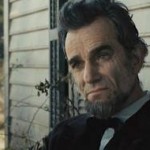
I like to see movies where a character in history is brought to life. One of my favorites recently is Lincoln, starring Daniel Day-Lewis as Abraham Lincoln.

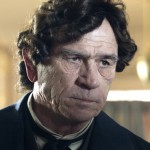
One favorite character was Thaddeus Stevens, played by Tommy Lee Jones because I had studied his speaking when I was in graduate school. Although he certainly had an important role in passing the Thirteenth Amendment, which outlawed slavery, my main memory of his speeches was the one he gave in the Pennsylvania House of Representatives, which saved free public schools in Pennsylvania.

I had always pictured him delivering a speech and admired his ability to move an audience. History demonstrates that his influence was enormous. Well, Tommy Lee Jones stamped in my mind the answers to any questions I had.

I don’t know if he accurately portrayed Stevens’ delivery and style, but now I have a specific mental image of what Thad Stevens looked like when he spoke and how he worked with an audience. Jones made him come to life by taking on his personality and speaking skills.

Seeing history come to life on the screen is a powerful way to remember an important historical figure that you studied in school.

Strengthening Your Speech by Quoting Others

When someone says or writes something powerful or memorable, you might think, “Why couldn’t I say it like that?”  Well, you can!  Jot down the quotation and the author. When you want to include that thought, say it exactly as the person expressed the idea so powerfully—and give that person credit for the statement.

          Strengthen your speech by quoting others. As Michel de Montaigne said, “I quote others only the better to express myself.”

            I have found great quotations from all kinds of sources:  from books and speeches to tour guides and my daughter-in-law. Gina has a knack for saying things in unique and memorable ways. One of her great lines is “Never mess with a happy baby.”  Tour guides repeat the same speech several times a day and have learned to hone their spiels. One New Zealand tour guide said as we got off the bus for our first break, “Remember, the difference between a passenger and a hitchhiker is about two minutes.” 

          Beth Vogt posts a daily blog, "In Others' Words," that can supply you with interesting quotations and thoughts to accompany them.

          Always relate the statement to the point you are making. The point should not be the quotation, but rather the quotation should support the point. When I stress the importance of reading books, I quote Descartes, who wrote, “The reading of all good books is like conversations with the finest men and women of past centuries.” 

          Your credibility is critical in speaking. Thomas Jefferson said, “Nothing is more confusing than people who give good advice but set bad examples.”  In seeking to help people understand the importance of humor and the lighter side of life, Alan Alda in his autobiographical Never Have Your Dog Stuffed wrote, “The difference between comedy and tragedy is that in a comedy, people usually get what they want; in a tragedy, they get what they deserve.”

          Use a quotation to begin or end a presentation. Use a special statement to help the audience visualize better. Use a line as a change of pace from your own content.

          You may think as you read this, “Well, Steve, this is pretty much just common sense.”  However, as Stephen Covey wrote, “Just because something is common sense does not make it common practice.”


Top Ten “Must-Reads”

I cannot stress the importance of reading books without suggesting some books to read! Since I have averaged reading 75 books a year for the past fifteen years, I have some strong opinions. Some books may not be the most popular but they are great reads. All I list here are non-fiction because these contain the human interest stories and ideas that can easily be incorporated in speeches and conversations.

But I love fiction, too. My favorite fiction writers are Harlan Coben, Robert Parker, Michael Connelly, Lee Child, Jeffery Deaver, and Barry Eisler. I have never read a dull book by any of the above. If you would like more good fiction/
mystery writers, email me and I’ll send a second list of recommended authors.

My Top Ten “must-reads,” alphabetical by author, include:

  • Never Have Your Dog Stuffed by Alan Alda. You may think of Mash when you hear his name, but this book is so entertaining and well-written you can’t put it down.
  • The Perfect Mile by Neal Bascomb is the story of Roger Bannister breaking the four-minute mile, which many thought would never happen. The account of the race is breathtaking.
  • Salvation on Sand Mountain by Dennis Covington. A reporter for The New York Times got so caught up in covering the murder trial of a snake-handling preacher in Alabama that he wrote a book about snake-handling as a religious practice in the hills of the South. I learned about a sub-culture that I did not know existed.
  • Going Solo by Roald Dahl, a gifted writer for both children and adults, is a series of short autobiographical stories. His ability to describe and create suspense is masterful.
  • Try Giving Yourself Away by David Dunn was first published in 1947 and reprinted in 1987. This is one of the first how-to books I read years ago, and I still refer to it when I need a boost on the importance of serving others for your own happiness and well-being.
  • The Luck Factor by Max Gunther is a marvelous little book on how luck comes your way the more you become acquainted with various people. Although it was not hyped as that when this book was published in 1977, this is one of the first books on networking.
  • Sandy Koufax: A Lefty’s Legacy by Jane Leavy is not only the captivating story of one of the greatest major league pitchers of all time, but also demonstrates what commitment to principles and hard work can produce. He played in the majors 12 years and retired at 30—one of the youngest ever to do so.
  • And Never Stop Dancing by Gordon Livingston is a series of short essays on his life philosophies. I love the title, and the chapter titles remind us of common sense principles told in creative and thought-provoking ways.
  • Into Thin Air by Jon Krakauerwas the beginning of a plethora of books on heroic human fights against nature. This is a view of mountain climbing that is breathtaking and you don’t even have to climb to get the feeling.
  • Against Death and Time by Brock Yates chronicles one year in the history of racecar driving. The story is told through the daredevil lives of several young men, young because they never lived to old age.

This is the list. Testimony to how I feel about them is that I kept these ten for my own library instead of giving them away or donating them to the public library as I usually do. Have at it!

What non-fiction books would you add to this list? Comment so the rest of us can profit from your reading experiences.

Book It to a Book!

This time of year publicity for the new fall television schedule is ubiquitous. What will be the hit program?  What new star will we be introduced to?  What will be the best creative idea for a series? 

            But there is another medium that is always new even though it is old: the world of books. Uncle Tom's Cabin, written in 1852, exposed the mistreatment of black slaves in the United States, and may be new to someone who is not familiar with what led to the American Civil War. Though the book had a great impact on people’s attitudes toward slavery, there is no specific season for a certain book; all seasons have benefits to the reader. Readers today can still learn important principles from Uncle Tom’s Cabin.

            Reading is not our nation's favorite pastime. According to self-publishing guru Dan Poynter, one third of high school graduates never read another book for the rest of their lives. Over 40 percent of college graduates never read another book after college. Seventy percent of adults have not been in a bookstore in the last five years.

            Yet few activities can enrich a person's life like reading books. You may not be able to travel to Hawaii, but you feel like you have been there after reading James Michener’s Hawaii. You may not have a schedule that allows you to attend a knitting class on a regular basis, but you can learn the skill with a book on how to knit. You have a chronic ailment; learn about it by reading a book on the subject.

            Reading enriches your vocabulary. When you come to a word you do not know, you may be able to figure it out from the context. If not, stop for a moment, look up the meaning, and continue reading. You don't have to see a movie to escape into another era; read a book. Some books may interfere with sleep or work because you are caught up in the action of the characters in the book, but the risk is worth it.

            Books can change a life because of the information they contain. You might read a self-help book that gives you information to get out of debt, improve your marriage, start a hobby, or find new employment.

            Try spending less time on the new television shows this fall. Turn off the flat screen and read a book. Recently, I've learned much about writing by reading Anne Lamont's Bird by Bird, published in 1995, and have been held in suspense by Harlan Coben's current book, Shelter. As Joseph Brodsky said, "There are worse crimes than burning books. One is not reading them." 

Stephen D. Boyd, Ph.D., CSP, is Professor Emeritus of Speech Communication, College of Informatics, Northern Kentucky University, near Cincinnati. He presents keynotes and seminars to corporations and associations whose people want to speak and listen effectively. Visit his site to read other valuable articles on effective speaking and listening.
Never Stop Dancing

An article in The New Yorker featured the career of Dick Van Dyke, who at almost 85 years old was singing and dancing in A Musical Memoir. One of the themes throughout the article was his high energy level. In fact, on Thanksgiving Day of last year he appeared at a mission on Skid Row, entertaining the residents while they ate. His comment, “I sing and dance. That’s what I do.”
I think that philosophy is critical whether becoming a better speaker or getting the most out of our lives. Never Stop Dancing is even the title of an excellent book by Gordon Livingston. I completed my career as a professor a couple of months ago and in advance I asked a colleague if she would dance out of the classroom with me at the end of my last class. She agreed.
As scheduled, she showed up and we danced down the hallway. What I did not know was that word had gotten out and about 150 students lined the hallway to watch the event. Our secretary filmed with her flip camera and you can watch us dance at Steve Boyd Fare Well Dance.
I’ve been taking dancing lessons for 17 years and I don’t intend to stop dancing. I’ve been teaching and speaking for several decades and I plan to continue speaking as often as I can and experiencing as many new things as I can.
This philosophy should guide our daily lives. For example, as a speaker I want to continue to improve. I believe my best speech is my next one. Each presentation I deliver gives me more experience. I urge all speakers always to seek to improve. Never stop dancing.
You can always make improvement if you keep working at developing your skills. This is true whether you are learning a new technology or simply working on your golf game.
Remember the life philosophy of Dick Van Dyke: “Never stop dancing.”


I Wanted to Cry!

          My favorite annual sporting event is the Indianapolis 500. Everyone in the family knows not to bother me from 12:15 to about 3:30 on the Sunday afternoon of Memorial Day week-end, because I'm glued to the television watching THE race. Yesterday afternoon was an exciting race. There were many lead changes and no one seemed to have the dominant car this year. The last lap had a rookie leading the race—an incredible achievement for a rookie to win the Indy 500. Only eight rookies have won in the hundred years of the race. JR Hildebrand, with a four-second lead,  was one turn away from winning the Indianapolis 500 when he skidded high into the wall on the final turn and Dan Wheldon drove past to win. It was Wheldon's second time to win the Indy 500, but the first time he was in the lead in this race.

          Now think about this. Hildebrand had already successfully negotiated that turn 199 times in the race. This time he was leading the race. There was no traffic nearby. The checkered flag was moments away and he lost control going into the last turn.

          His did not lose a tire. His steering did not break. The car was mechanically sound. He simply did not pay careful enough attention to something he had done nearly 200 times earlier in the afternoon. Maybe he was thinking about the bottle of milk awaiting the winner in Victory Lane. Maybe he was already counting the huge sum of money the winner would take home. But he wasn't paying careful attention and he crashed. I couldn't believe what I saw on the screen! I wanted to cry! I couldn't bear to watch him climb out of the car.

          Another sad story to add to my collection about what happens when you do not pay attention. Most of our paying attention mistakes are less public and less costly. Remind yourself at the start of each day:  pay attention. According to Winifred Gallagher, in RAPT: Attention and the Focused Life, by simply paying attention to your food and eating it slowly, you can cut 67 calories from each dinner and seven pounds in a year.

          Gift cards are a great boon to retailers and restaurants. The reason? People forget about them and don’t use them. We don't pay attention! According to Tower Group, a consulting firm, nearly 5 billion in gift cards will go unused this year. No wonder we see so many advertisements for gift cards.

          Don't miss out on life simply because you are not really present when you are present. As I quote in “Be Present When You Are Present,” Ray LeBlond said, “You learn something every day if you pay attention." And, I would add, you won't lose a career auto race!

Stephen D. Boyd, Ph.D., CSP, is Professor Emeritus of Speech Communication, College of Informatics, Northern Kentucky University, near Cincinnati. He presents keynotes and seminars to corporations and associations whose people want to speak and listen effectively. Visit his website, http://sboyd.com, to read other valuable articles on effective speaking and listening.

Is Yours a Tape Measure Homerun?

Mickey Mantle is my all time favorite athlete. Each time he went to bat, we had the same feeling Reds fans have today when Aroldis Chapman comes in to pitch. Now we think, "How many pitches will top a 100 miles an hour?" With Mantle we thought, "Can Mantle hit another ‘tape measure homerun?’”

The term "tape measure homerun” comes from a homerun Mickey Mantle hit on April 17, 1953, at Griffith Stadium in Washington, D. C. A public relations person for the New York Yankees, Red Patterson measured and found that the ball traveled 585 feet. He then called it a "tape measure homerun.” The term stuck for any long homerun. Mantle later said that the only reason people remember that homerun over the other homeruns he hit was because "Red Patterson attached a number to it," as told in The Last Boy by Jane Leavy.

A point from this story is that people remember specifics; specifics give people direction and focus. Whether delivering a speech or talking to a person over coffee, be specific.  When giving instructions to an employee or a child for a task deadline, don't say, "Do it soon," or “Clean your room.” Say "I want this to be in by 4:30 tomorrow afternoon," or, “Put away all your clothes and books that are on the floor and bed.” When someone asks for directions, don't just give the address; say, "This building is next to Frisch's on Central Parkway a few blocks from the entrance to I-74 West." 

Specifics are important in most actions in life. For example, always know how long you can speak before delivering your presentation. Whether I’m giving “High Bid,” or “Be Present When You are Present,” or a presentation skills workshop, I make a point to end 2-3 minutes before the end of my allotted time. Regard for what I am saying wanes quickly if I run overtime, but ending a bit early leaves everyone on a high note.

Also, keep track of the time when you are meeting someone to discuss a matter. That person may have planned on a brief lunch and not have time for a leisurely afternoon discussion. Be specific when making such plans.

You can immediately improve the quality of your communication in a speech or conversation by adding specificity. So instead of saying, "I'll have another blog entry soon."  I'm going to end with "Look for my next blog entry by the afternoon of Monday, April 18.”

Comedians Can Write, Too!

I typically think of Tina Fey in connection with "30 Rock" or "Saturday Night Live."  I would not expect her literary skills to show up in an article in the March 14  The New Yorkerbut it's there, titled "Lessons From Late Night."

When looking for material for your next presentation, read what comedians write. For example, she begins the article with, "In 1997, I realized one of my childhood dreams. (Not the one where I'm being chased by Count Chocula.)”  That is a good example of how to start a speech—a startling statement that prompts both interest and laughter.

Later in the article she refers to lessons she learned from her boss, Lorne Michaels, at “Saturday Night Live.” One principle she learned was, "The show doesn't go on because it's ready; it goes on because it's eleven-thirty."  Wow! I wish I'd thought of that when illustrating how important deadlines are in being present when you are present. Well, it doesn’t have to be original with me for me to use it. I just give credit for the source and quote her. Another important presentation principle: quote others who say it better than you can! 

That is just one example from her fascinating article. She can write funny as well as be funny—two skills that don’t always go together. And her book just released this week, Bossypants, is destined to be a hit whether or not you agree with her opinions or attitude.

We can also get material from reading funny authors and columnists. Dave Barry often deals with current events and family matters in a humorous way. We don't usually think of Alan Alda first as a comedian, but his writings have a huge amount of humor. One of the funniest stories I have ever read is his description of having the family dog stuffed after its death. Thus the title story from his book, Never Have Your Dog Stuffed, in which the story appears. He describes what Rhapsody looked like when they brought him home from the taxidermist. "The dog had a totally unrecognizable expression on his face. Nobody in our family knew who this was. He sat on his blue velvet board, looking up at us like something with rabies. We were kind of afraid of him…it became difficult to walk into the room without feeling that a wild animal was going to spring at you." What vivid description! You need this vividness in a speech when describing what you want the audience to do or how you want them to feel.

Comedians have a sense of audience that we can learn from to improve our speaking. They know what an audience will respond to, whether it is standup comedy or the reader getting hooked on an essay or a book they have written. They are experts at timing as they speak or write. They know just how to place the "punch line" where you will get the greatest response, and this shows in their writing.

One of my all-time favorite comedians was Red Skelton. His thoughts were both funny and thought-provoking, such as "I left home because I was hungry." And for speakers considering the importance of delivery: "It is not what you say that is funny, but it is how you say it."

Stephen D. Boyd, Ph.D., CSP, is Professor of Speech Communication, College of Informatics, Northern Kentucky University, near Cincinnati. He presents keynotes and seminars to corporations and associations whose people want to speak and listen effectively. Visit his site to read other valuable articles on effective speaking and listening.

Snakes in the House!

I feel safer now. After six days of searching, the Bronx Zoo staff found the escapee, a deadly Egyptian Cobra, less than 100 feet away from its cage home.

That seems to me to take not paying attention to a new level—or low level, depending how you want to view the event. What were they thinking? To allow a potentially lethal weapon to escape unnoticed. Wow!  How about a training course in "Don't take your eyes off the snake when its door is open," or "Keys to giving attention to deadly snakes." 

But this incident (not tragedy, thankfully) demonstrates how we are often oblivious even to dangerous objects. We don't pay attention; we don't seem to focus; we overlook the obvious, as I stress in my after-dinner speech,  "Be Present When You Are Present."  

According to James Gleick in his book Faster, we spend sixteen minutes a day (roughly one year of our lives) looking for lost possessions. The old hymn by William Augustine Ogden, “Seeking the Lost,” takes on new meaning in today's fast-paced multi-tasking world. I would rather spend my time looking for lost souls than looking for lost cobras.