The Internet and Speech Data: Beware

The ever-present internet can be a curse or a boon to the speaker. The internet allows you as a speaker to keep current on your topic without ever entering a library building; the library is at your fingertips.

But there can be a down side if you are not sensitive to the internet skills of your audience. For example, in a recent communication seminar with about 140 in attendance, I was going over the bibliography I had passed to them. I feel obligated to explain two or three of my sources because they were written so long ago.

One such book is The Luck Factor by Max Gunther. The original publication date was 1977. I explained that it was one of the first self-help books which made the point that I often make: we want to have a large number of resource people we can connect to. Gunther makes the point that the more people you know, the luckier you will become. Because I had not done recent research on the book, I stressed that it was out of print and difficult to find.

Less than a minute after I made that assertion, a participant raised his hand and said, “You can buy the e-book version on the internet for $5.23.”

It was a little embarrassing for me, but the statement got a good laugh. I needed some humor at that point and I was able to reinforce a previous point I had made about audiences: as a speaker, you must stay current with your information. Your audience can check on your data with their smartphones or tablets as they listen. (Later I discovered that the book was re-released in 2010 and is readily available—in case you’re interested!)

The unexpected in presentations is a factor that keeps you as the speaker from getting bored, even if you have delivered the material many times before. In the future, I will be even more aware of the audience’s ability to research my material as I speak.

A Punch Line for Many Occasions

I’m always looking for punch lines or short quotations that I can use for multiple speaking situations. Recently I read an anecdote that that will serve nicely for any speaker.

A little boy wants a dog and his dad finds a man online who has a litter of puppies to give away. So the father and son go visit the dog owner. He shows him the five puppies and one, the smallest one, is wagging his tail vigorously. The son picks that one. The father asks him why since it is the smallest of the litter. His son answers, “Because it has a happy ending.” boy and puppy

The possibilities are many. End a toast for a promotion. The toaster delivers the punch line and then ends with, “We knew when we hired Jeff that there would be a happy ending to his hard work. I believe that this promotion is just the beginning of many happy endings for Jeff.”

Introduce someone who has overcome a large obstacle to be the speaker. After telling the story, deliver the punch line, “With her presence here today to speak, we can certainly say about Sara, ‘This is a happy ending.’”

Preview your next motivational speech by telling the story and then say, “I believe the points I will make today will aid you in many happy endings.” Then go into your first point.

You can make preparing and delivering speeches less burdensome when you have a good story or quotation to use for a variety of occasions.

It All Comes Down to Preparation

I recently read a story about a preacher who got into the pulpit week after week relying on the Holy Spirit to tell him everything he was to say. Sunday after Sunday he would pray, “Lord, give me your message for this morning. What do you have to say to your servant?”

Finally one Sunday he got up and said again, “Lord, give me your message for this morning. What do you have to say to your servant?”

The Lord finally answered him, “You’re not prepared!”

Over the past few months my wife Lanita and I have been working on a dance routine for our instructor’s showcase program. After each lesson, his advice is, “You have to spend time on this routine. You need to go through it in your mind. Watch yourselves on tape.” In essence, he is saying, “You must prepare.”

When I spend time with a client working on a presentation, I stress that preparation is a key to his or her success. You must revise and practice and revise and practice. You may not be able to outsmart your competition, but you can “out-prepare” him or her.

I will sometimes respond to a student who is disappointed in a grade he or she earned on a presentation with this question: “How much time did you spend in preparation?“ Usually an awkward silence follows as the student struggles with how to answer that question. Too many times the answer is, “I really did not get to spend much time on it until last night.” That usually ends the conversation. We both know preparation would have made a huge difference in the outcome.

In my four decades of working with students and clients, I have found that it is not the person with the highest IQ who is most successful, but rather it is the one who prepared the most.

Creativity in Relating to Your Audience

What often separates the good speaker from the exceptional speaker is how he or she adapts to the audience. I’ve seen unique ways in which speakers have done this. One speaker took a photograph of the building the audience was in and used it to talk about how to determine the value of a building as a piece of real estate. Another speaker took several photographs of people during the social hour and used them to connect to some of the applications in her speech.

One of my favorite all-time examples, though, is from one of my students who wrote a class limerick for her final assignment of the semester. In this advanced public speaking course, we had listened to students give four speeches each over the l5 weeks. This young woman had taken careful notes in developing background on each person as he or she revealed personal information during the course of the semester. For her final speech, she gave an account of the class in rhyme. Here is an example.

As much time has come to pass,
I’ve learned a lot about those in this class.
They began to unravel—
Like we know not to travel
With Shelli, the European lass.

If for a good meal your stomach does churn,
For food, you’ll continue to yearn,
If Leslie or Brian cooks,
You’d better give them a book,
Or ask Stephanie since she did learn.

We know Casey is a good mother,
And Jennifer is an Elvis lover.
Vania’s accent’s not fake,
Kyle was lost in a lake,
And Beck B. tells jokes like no other.

And this pattern continued on throughout her presentation. She related to her audience because we were the heart and soul of the presentation.

Before speaking to a group of sales reps, I’ve found it helpful to ride with one of them to visit clients. Both conversation and observation help me to adapt to that audience.

Think about what special skills you have that would help you uniquely identify with the audience. This might be the key that helps you to compete successfully in the marketplace.

Engaging the Audience

At the beginning of the session in a recent presentation skills workshop, I asked what each participant wanted to gain from the one-day program. Half mentioned the ability to engage the audience. Here are some of my suggestions.

Ask questions. Even if everyone does not answer, this mental exercise makes everyone think. When you receive an answer, others may enter the discussion. Even a rhetorical question may work. Though you do not expect an answer, you still engage the audience’s thought process.

Encourage the audience to do something in unison. This might be to sing a verse of a song with you, or quote a familiar line from a play or movie. When talking about reframing a message, I make the point that the story of Rudolph the red-nosed reindeer is really a story about reframing. You see him in a different light when he is able to guide the reindeer through the fog on Christmas Eve. He still has the red nose, but there is a reframe of how he is perceived by the other reindeer. During that explanation, I stop and have them sing a verse of “Rudolph the Red-Nosed Reindeer” with me. I find that having them sing in unison gives the audience a shot of energy and they are more attentive to my application.

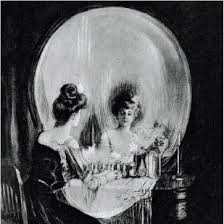
Show a picture and have the audience tell what they see in the picture. In talking about perception I will sometimes show the classic visual of the head of a skeleton or the woman at her dressing table. Getting the audience to see both is a fun way to make the point.

Have the audience fill in the blank. You might have them guess an amount of money or how much time something takes. I sometimes stress the importance of learning a second language and I will ask what are the three most popular languages in the United States after English. That elicits good participation. Most will get Spanish as the number one second language but Chinese and French in that order usually takes a little longer.

If you can’t think of a word, see if your audience can fill it in for you. There is nothing wrong with having a mental block on a word and asking the audience for help. I have found that the choices of words they suggest are often better than the word I was planning to use.

When you see your audience becoming lethargic or bored, think about one of these techniques for engaging the audience.

The Ideal Speech in Three Minutes

I’ve listened to thousands of speeches in my career as a university professor, presentation skills coach, and consultant. I recently watched on YouTube a young man give a striking speech that includes all of the essential ingredients of the ideal speech-and he did it all in three minutes.

Purdue University annually conducts a contest among Ph.D. candidates to deliver a short presentation summarizing the research from his or her dissertation. This spring 80 individuals competed, and the winner was Theon Hill, a graduate student in the Communication Department. His dissertation topic was “The Exodus and American Culture.”

Watch the video and see if you can identify the essential components in delivering an effective presentation.

Thelon’s delivery style is dynamic but not too dramatic. He uses his hands and arms to reinforce and describe his ideas. He takes a step when changing direction in his presentation. He has variety in his rate of speech and punches out proper nouns and key phrases. His pauses help the listener realize the emotional impact of what he is saying.

His content includes the necessary parts of an effective speech. He opens with a quotation from Martin Luther King, Jr., that leads easily into his main thoughts and gets the attention of the audience. We cannot resist listening to him after that beginning. He states his thesis shortly afterwards when he says, “The story of the Exodus in the Bible is the most influential story in American Culture. “

The rest of the speech underscores this point with specific instances in history, comic book applications, and even a powerful example of the impact of the Exodus story in the design of the Statue of Liberty. His ending is succinct and reinforces the main thought in his presentation.

For a quick reminder of what you can do to have a complete and effective presentation, review Theon Hill’s winning speech.

The Extemporaneous Presentation: When and How

The extemporaneous presentation is one that is carefully prepared, but not memorized. You organize the speech but do not write it out word for word. Instead you use key words and key phrases to trigger the next thought. Note cards or sheets of paper encased in plastic covers are the most efficient methods of delivering this presentation.

This mode of presentation is the one where you can make the best contact with your audience. You can also adjust your length and even content of the presentation as you speak. Even though you are carefully prepared, you should not sound memorized or that you are reading your notes to the audience.

Here are some steps you can take to assure you that you are preparing an extemporaneous presentation.

Begin by spending time in thinking about what you want to say. Don’t write things down yet because once you have an idea on paper, other ideas are less likely to be considered. Talk about the topic to a friend. Google the topic and see what you can find.

Once you have spent a few days pondering the topic, write notes down on paper. Don’t worry about organization at this point and don’t write in complete sentences for this will tempt you to write out your speech.

As in a jigsaw puzzle, begin to fit the pieces of thoughts and words together in a rough outline. Based on your thoughts, consider what will make up the key points and the support for each one. Which part would be the best way to start and where are you going to place the strongest argument?

Then you are ready to practice the speech. Don’t worry about word choice or even how the ideas fit. Talking through your speech will give you ideas on the best transitions, wording of your main points, and use of nonverbal cues.

Practice aloud at least three times and one of the times should be with someone as your “audience” listening to give you feedback. Practice with the notes you plan to use in the actual speech. On the day you speak, look through your notes and practice some small portion of the talk, such as one of your stories (you will, of course, have good stories!) and the opening two minutes. This will increase your comfort level and build confidence.

This speech style should be the one most speakers choose to incorporate in their presentations. You will appear most natural, most attentive to your audience, and more at ease than in either of the two types—manuscript and impromptu—we have discussed earlier.

One of my favorite definitions of public speaking is conversation with a purpose. Extemporaneous speaking best exemplifies this definition.

The Impromptu Speech: When and How

The impromptu speech is one without any preparation. I trust that during your career the impromptu is not your most common speaking context. A few situations do occur when an impromptu speech is very important.

Most job interviews involve answering questions. Each answer might be considered an impromptu presentation.

You attend a meeting and an issue comes before the group about which you have a definite position or a vested interest. Although you were not expected to contribute, you speak to the issue.

The boss may ask you unexpectedly to give a report about your department or a recent conference.

Here is a simple formula for delivering the impromptu presentation. Begin with a positive approach. As you start, smile, look confident, and begin with an assertion. Many impromptu speeches begin with the deer-in-the-headlight look and stumbling over the first words instead of speaking with confidence. With the assertion, provide a story or example from your experiences. An assumption is that you would not offer to speak or be asked to speak unless you have experienced and/or researched the topic.

Keep the length under a couple of minutes. Otherwise, you may exhaust your knowledge and start repeating yourself or making comments that you would later regret. End by repeating a version of your opening assertion.

Most important, however, is never to deliver an impromptu speech when you are expected to deliver a prepared speech!

The Manuscript Presentation: When and How

Most speakers should avoid the manuscript presentation at all cost. A manuscript speech usually promotes no eye contact, a monotone voice, and few gestures. The audience understands that the speaker is reading to them and may be thinking, “Why didn’t she just email it to me to read on my own?”

However there are exceptions. If you are eulogizing someone, if you offer information that could be misquoted or misunderstood, or if you are too busy to prepare the speech and need to use a speechwriter, use a manuscript.

When you deliver a manuscript speech, these techniques will help you avoid the problems listed above. Use a font size which is easy for you to see and double or triple space. Print only on the top two thirds of each page to avoid the audience seeing only the top of your head by the time you get to the end of the page. Eye contact is much easier when you use these methods.

Include symbols above words where you want to make eye contact, use a gesture, take a step, or speed up or slow down. Don’t use words to remind you or you may accidentally speak the reminder words. Be creative with your drawings. For example, you might draw a waving hand, a megaphone, or a pair of eyes. I give more suggestions in From Dull to Dynamic.

Underline words which you want to emphasize. With difficult words to pronounce, write the way it is pronounced phonetically above the word. Read through the script, and if you stumble over certain words or phrases, include a synonym instead or find another way of saying the same point.

Practice a minimum of three times. Never deliver the manuscript without practicing aloud and in front of someone to give you feedback. The more you practice, the more you will achieve your own voice and the less you will put your audience to sleep by reading in a monotone.

A speech writer who did not like the politician for whom he wrote knew the speaker never read the script before he delivered it. On one occasion when he stood to speak the speechwriter had as the last sentence on page one, “These three points I am about to give you are the most important ideas I will speak to you today. “ As he turned the page, it was blank except for these words, “You are on your own. I quit.”

If you have a speechwriter, treat him or her well, and use a manuscript only under special conditions.

A Special Use for a Note Card

A point of discussion when talking about public speaking is whether or not to use notes. And if you do use notes, should they be a manuscript, a sentence outline, or key words on note cards that you refer to during your presentation?

The one time when you want to use a note card is when you are delivering a significant quotation or piece of evidence.

Here are a couple of reasons. When you have the data written on a card and pull it out and read the line to the audience, you will create more credibility with your piece of evidence. We assume that if you have it written on paper, you did not manufacture the proof.

A second reason is that you take pressure away from yourself by not having to remember the exact figure or wording of the testimonial. You will be less uncertain and more confident in delivery.

What I often do if I have several pieces of data to quote is to put all the quotations on one card and then simply lay the note on the lectern and only pick it up to read the line or statistic.

Keeping things simple in speechmaking is critical since you already have too many variables that you can’t control. Not having to remember an exact number(s) or testimonial simply makes your work easier in front of an audience. Add to that the increased credibility and you have justification for using a note card effectively.