
Upstaged on Stage

I remember watching a major country and western star upstaged by the warm-up act. Though the group had finished their set of songs, the audience would not let them leave. They received a standing ovation and deafening applause. When the star came on stage, the crowd response was weak at best and the performer acted as though he were mad at the crowd. He did not handle this well. I give this as a backdrop because I was upstaged quite unintentionally before a recent speech.

Before I spoke, many door prices were passed out to the audience. I was amazed at how many $25 to $100 prizes in the form of tools, appliances, and retail and restaurant gift cards were distributed. Over $1100 in gift cards had been donated by a variety of business establishments in the community.

The person responsible for this bonanza was the executive assistant. She had simply done an outstanding job of getting the business community involved. The audience recognized this. When the master of ceremonies acknowledged her role, the audience immediately started loud applause and a standing ovation that went on for several seconds. The master of ceremonies was ready to introduce me and had a hard time getting the audience to stop applauding and take their seats.

When I reached the stage, I decided to “ride on the coattails” of enthusiasm and good will for her. Instead of beginning with what I had prepared, I began by saying that I had been present for many door prize events surrounding my speeches, but never one so extensive and so lucrative. I asked for another round of applause for this lady and called her by name. Of course the audience was delighted to thank her again. I jokingly said that my university might be hiring her soon to be one of our fundraisers.

Now I was connected to the positive vibes the audience had for Amanda who had done such a great job with the door prizes. I was able to capitalize on that feeling as I began my presentation. I believe one of the reasons the presentation was so well received was their connecting me to the great beginning of the session.

You can never predict what will happen in the events surrounding your presentation. The introduction may be poor, dessert may be served as you are introduced, the public address system may not work, or the background music won’t stop. You can figure out strategies for handling those distractions well. And if you are ever upstaged, remember that “riding the coattails” can help insure the success of your presentation.
Memorizing Parts That Can Improve Your Presentation

I’m often asked “Should I memorize my speech?” My answer is “no,” unless you are delivering a highly emotional presentation like an eulogy or a toast. In such a situation, emotions could overcome you and cause you to lose track of your line of thought unless you have the words in front of you.

However, if you are looking for more security as you speak, here are sentences in your presentation that you might memorize or at least have written in your notes for quick reference.

  1. Memorize the first line in your speech. You want to get off to a great start, and having a sentence that grabs the audiences’ attention helps guarantee success. I recently delivered a keynote for the first day of the meetings for a school system. I began by naming teachers I had had in school and then made the point that students will remember you because of the influence you will have on their lives in the upcoming year.
  2. Memorize the last line of your speech. People remember best what you say last. Make the last sentence count. One of my keynote speeches is called “High Bid.” In that presentation I suggest we sell ourselves each day by how well we speak and listen. My ending line is, “May you never sell yourself short and may you always go for the high bid.”
  3. To avoid using inappropriate verbalized pauses, consider memorizing a key transition to guarantee you carefully move from one point to the next. For example, this would be a good internal summary, “Now that I have talked about first and last lines, let’s move on to transitions.” This also eliminates the temptation to simply say, “Next I want to talk about…” after each point.
  4. One way to show you have adapted to a specific audience is to develop a sentence that applies uniquely to that group and still relates to your topic. In my keynote to the teachers I thought through and jotted down this line early in the presentation. “Not only do you have a new group of students but you have a new addition to your high school and a new entry way to Howell Elementary School.”

Though it’s best not to memorize your speech, including a few scripted sentences in your next presentation will give you more confidence as well as adding depth to your speech.

Engaging the Audience

At the beginning of the session in a recent presentation skills workshop, I asked what each participant wanted to gain from the one-day program. Half mentioned the ability to engage the audience. Here are some of my suggestions.

Ask questions. Even if everyone does not answer, this mental exercise makes everyone think. When you receive an answer, others may enter the discussion. Even a rhetorical question may work. Though you do not expect an answer, you still engage the audience’s thought process.

Encourage the audience to do something in unison. This might be to sing a verse of a song with you, or quote a familiar line from a play or movie. When talking about reframing a message, I make the point that the story of Rudolph the red-nosed reindeer is really a story about reframing. You see him in a different light when he is able to guide the reindeer through the fog on Christmas Eve. He still has the red nose, but there is a reframe of how he is perceived by the other reindeer. During that explanation, I stop and have them sing a verse of “Rudolph the Red-Nosed Reindeer” with me. I find that having them sing in unison gives the audience a shot of energy and they are more attentive to my application.

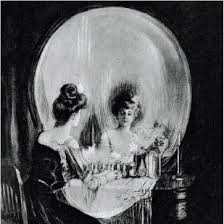
Show a picture and have the audience tell what they see in the picture. In talking about perception I will sometimes show the classic visual of the head of a skeleton or the woman at her dressing table. Getting the audience to see both is a fun way to make the point.

Have the audience fill in the blank. You might have them guess an amount of money or how much time something takes. I sometimes stress the importance of learning a second language and I will ask what are the three most popular languages in the United States after English. That elicits good participation. Most will get Spanish as the number one second language but Chinese and French in that order usually takes a little longer.

If you can’t think of a word, see if your audience can fill it in for you. There is nothing wrong with having a mental block on a word and asking the audience for help. I have found that the choices of words they suggest are often better than the word I was planning to use.

When you see your audience becoming lethargic or bored, think about one of these techniques for engaging the audience.